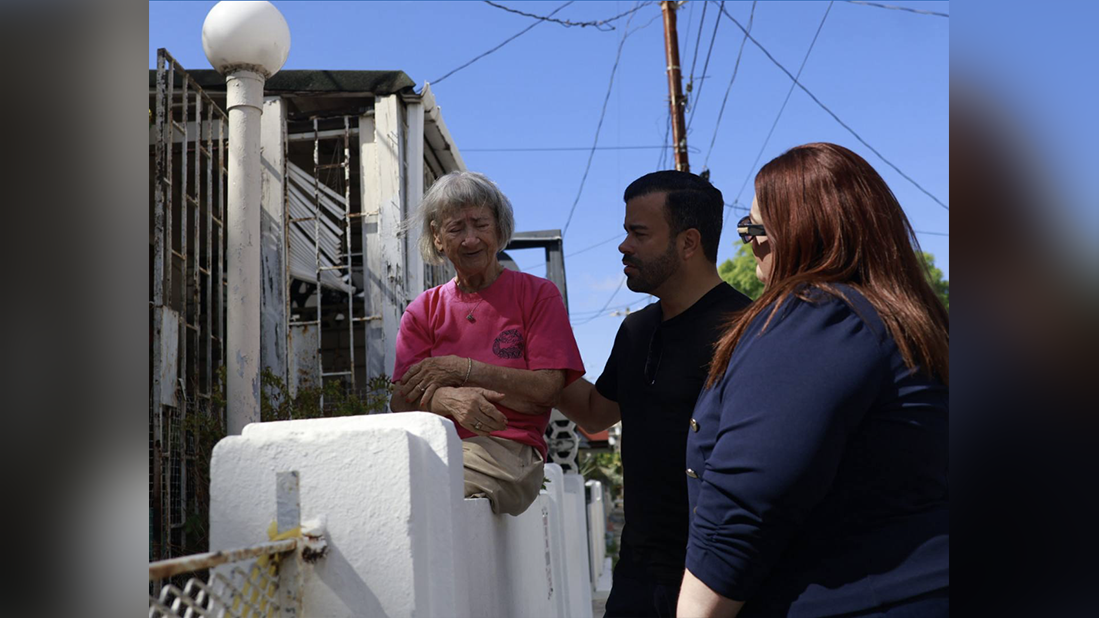
San Juan, Puerto Rico (October 27, 2026) – In a resolution that underscores how coordinated government and community action can turn a housing crisis into a dignified outcome, the Department of Housing has confirmed that Ms. María Magdalena Ortiz Rosario has completed the paperwork to move into a public housing apartment in the San Juan area. Crucially, the arrangement allows her to bring her pets with her once the remaining administrative steps are finished.
This breakthrough came after Ms. Ortiz Rosario weighed several housing options offered by the Department of Housing and the Public Housing Administration (AVP). According to her legal counsel, the lease agreement is set to be signed tomorrow, Wednesday, October 28. Still pending are the installation of water and electrical utility services, which must be completed before she can fully relocate.
The chosen unit meets a central condition that Ms. Ortiz Rosario insisted upon throughout the process: that she be allowed to keep her pets, whom she considers members of her family.
Also worth a look: Artist Clive Hemsley says your phone proves dogs outrank spouses in our hearts and Texas confirms first New World screwworm case in Cameron County as livestock zone expands.
“From the moment we learned of Ms. María Magdalena’s situation, we committed to supporting her in finding a safe housing alternative that respects her needs and her desire to stay with her pets. We are pleased that the assignment of her new home has finally been formalized. This effort aligns with the public policy of Governor Jenniffer González Colón, who has emphasized the importance of addressing the housing needs of our most vulnerable population with both sensitivity and a sense of urgency. We are grateful to all the organizations and individuals who joined this effort,” stated the Secretary of Housing, Luis Augusto Martínez Román.
To ease the transition, the Department of Housing coordinated the acquisition of furniture, appliances, food, and essential household items to prepare the new residence. The Department of Housing will also supply hygiene and personal care products, while the Department for Community Social Development of the Municipality of San Juan is providing a refrigerator, bedding, kitchen utensils, and a living room furniture set. Non-profits have also stepped up: Solo por Hoy and Hogar Ruth will donate a bed and a dining set, and the organization Rehaciendo Comunidades con Esperanza is contributing an electric stove, grocery vouchers, and a voucher for purchases at a department store.
Private citizens and other non-profit organizations have joined the effort as well, offering household items such as a microwave, toaster, coffee maker, and washing machine, along with food, cleaning supplies, and pet care items.
“This case demonstrates what we can achieve when the government, municipalities, non-profit organizations, and the private sector work together for the well-being of our people. Beyond simply securing a place to live, we have ensured that Doña María Magdalena has the essential resources to settle into her new home with dignity,” added Martínez Román.
The Department of Housing first became involved on October 8, when agency staff visited Ms. Ortiz Rosario’s residence after learning of an eviction proceeding. The following day, Secretary Martínez Román personally visited her to reaffirm the department’s commitment to helping. Since then, the Department and the Public Housing Administration (AVP)—in coordination with the aforementioned groups and her legal counsel—worked to identify housing options, complete documentation, and confirm her eligibility. After reviewing several alternatives, she accepted a housing unit on October 26 and finalized the assignment the next day.
The Department of Housing and the Public Housing Administration will continue to monitor the case until the lease is signed, utilities are connected, and Ms. Ortiz Rosario has moved into her new home.
Why it matters: This case is a vivid reminder that housing policy can be humane and flexible when agencies prioritize the individual needs of vulnerable residents. By treating pets as family and marshaling resources from multiple sectors, Puerto Rico’s government has set a precedent for compassionate, efficient crisis response that others can follow.