Staff Sergeant Michael Torres spent three tours in Afghanistan before a roadside explosion ended his military career and, as he describes it, nearly ended everything else. He came home to Camp Pendleton with a traumatic brain injury, severe PTSD, and a sense of purpose that had been shattered along with the Humvee he’d been riding in.
“I couldn’t sleep. I couldn’t be around people. I couldn’t go to the grocery store without feeling like the walls were closing in,” Torres said. “My wife tried everything. My therapist tried everything. Nothing was working.”
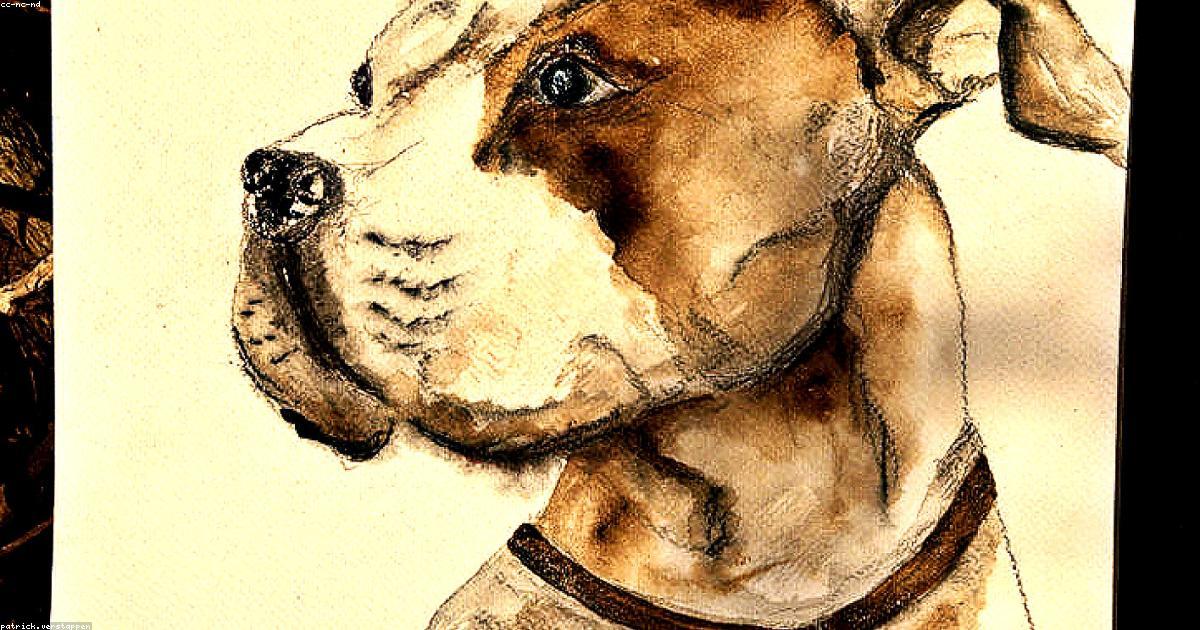
Then, in the spring of 2022, a fellow veteran suggested Torres visit a local rescue shelter. Not to adopt — just to walk dogs as a volunteer. Torres was skeptical, but he went. And that’s where he met Duke, a four-year-old pit bull with a scarred face, a missing ear, and a past that nobody at the shelter could fully piece together.
“He was sitting in the back of his kennel, not looking at anyone,” Torres recalled. “Every other dog was barking, jumping, trying to get attention. Duke was just sitting there, quiet, like he’d given up. I knew exactly how that felt.”
Torres started visiting Duke every day. He’d sit outside the kennel and talk to him. After a week, Duke moved closer. After two weeks, Duke let Torres pet him through the bars. By the end of the month, Torres filed adoption papers.
The transformation was mutual and remarkable. Duke, once withdrawn and fearful, began to open up in Torres’s care. He learned to play fetch, to walk calmly on a leash, to sleep on the couch without flinching at sudden sounds. Meanwhile, Torres found that Duke’s presence quieted the noise in his own head.
“Duke sleeps next to my bed, and for the first time in three years, so do I,” Torres said. “He knows when I’m having a rough night. He’ll get up and put his head on my chest. I don’t know how he knows, but he does.”
Torres’s therapist has documented significant improvement since Duke entered his life. His anxiety episodes have decreased, his sleep quality has improved, and he has begun attending group therapy sessions — something he previously refused to do.
Torres and Duke now volunteer together at the same shelter where they met, helping other veterans connect with rescue animals. “We saved each other,” Torres said simply. “That’s the only way I know how to say it. He needed somebody, and so did I. We just got lucky enough to find each other.”